
Today is trans day of visibility, an annual day to celebrate and uplift two-spirit, trans, non-binary, and gender-diverse people – and spotlight some important research supporting this group.
As Canada’s population ages, there is a growing demand for research that supports strong healthcare for patients throughout the lifespan. Healthy Aging Among Trans People Using Hormone Therapy: Setting the Research Agenda is one of multiple initiatives involving WHRI members that will identify areas of research that stand to have the most positive impact on specific populations entering older age.
Primary Investigator Dr. Devon Greyson, Assistant Professor at the UBC School of Population and Public Health, and their team, began the research with funding from Michael Smith Health Research BC in 2024 in the form of a Convening and Collaborating Grant. The funding from this award allowed the study team – which includes WHRI members Dr. Jerilynn Prior and Dr. A.J. Lowik – to convene a group of community leaders, clinical experts, researchers, and people with living/lived experience. The group met to develop a list of research topics that they felt were important to investigate, as well as important methodological considerations for research aiming to answer priority questions. After this initial meeting, the team interviewed additional clinical and research experts internationally to validate and add to these preliminary priorities.
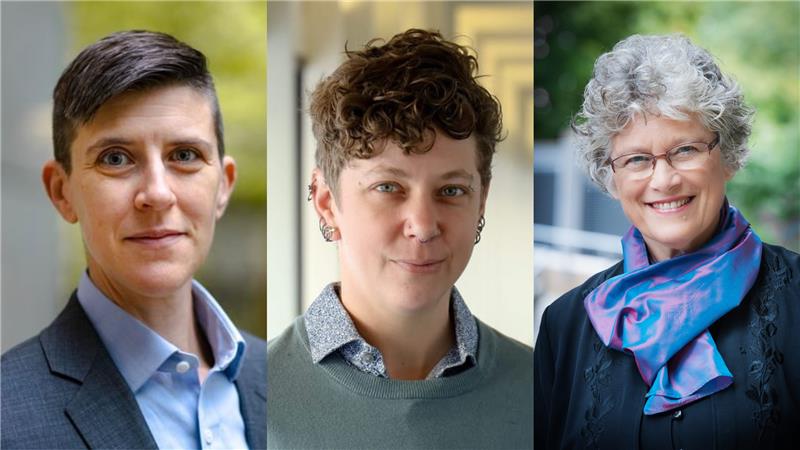
Based on the expert committee and additional interviews, the study team was able to develop the Healthy Aging Among Trans People Using Hormone Therapy survey. The survey is currently open and seeking responses from adults (18+) who either identify as a member of the trans, Two Spirit, non-binary, and gender diverse community or are health practitioners with a clinical interest in GAHT, for example clinicians who prescribe GAHT or other types of hormone therapy, or who frequently provide care for trans and gender-diverse patients.
The survey overviews the previously identified research priorities and offers space for participants to identify questions or research areas that may not have been covered in those initial conversations. This not only serves as a validation exercise for the existing research priorities but presents clinicians and trans and gender-diverse people in the broader community with an opportunity to lend their voice to the research conversation.
The team has so far gathered about 100 valid survey responses, and are hoping to gain as many as possible, with a rough target of around 250. Crucially, they are hoping for a mix of responses from clinicians and those with lived experience.
The ultimate aim of the survey is to gather enough responses to process into a robust report identifying urgent research priorities for this group. This report, in turn, will serve as an advocacy tool, allowing the future researchers to explain the need for funding into the identified research areas by demonstrating the public and professional interest. Similar surveys, such as the Mapping Menopause survey (which itself grew out of the WHRI-led HER-BC initiative on experiences of menopause in the province) are already helping to set the research agenda for this area of women’s and gender-diverse people’s healthcare – and helping WHRI members advocate for support in these areas.
The existence and importance of Dr. Greyson’s survey is in many ways encouraging – it means there is a large enough cohort of trans people on GAHT who are aging. Human hormones are highly complex, and though we know a little, there is a lot we still don’t understand. Hormone levels fluctuate naturally throughout the lifespan, and are also highly individual. Setting a research agenda for a population that receives exogenous hormones (that is, hormones originating outside of the body) represents a key opportunity to study hormonal changes, learn about how hormone levels impact and interact with the aging process, and look closer at how changes in hormone levels can impact a person’s mental and physical health. The identification of research priorities for GAHT, and for people entering menopause, will (hopefully) generate more research that explores how hormones work and how exogenous hormones can be used in various populations to maintain good health, well into old age.
The research priorities identified through this study will have far-reaching implications – by studying healthy aging among trans people using GAHT, we can also learn more about how Menopausal Hormone Therapy (MHT) supports health in cisgender women, or how estrogen and progesterone interact during the aging process. Studying the long-term effects of varying doses of testosterone in transmasculine people can also shed light on the potential benefits or risks of low-dose testosterone to treat certain menopause symptoms.
Two-spirit, trans, and gender-diverse people deserve quality care, and this research will support healthcare that allows people to live longer, healthier lives. Everyone has hormones, and the research agenda set by this survey stands to benefit the entire population.