
Research Spotlight: Dr. Bryndl Hohmann-Marriott on Menstrual Cycle Tracking Apps and Patient-Generated Data
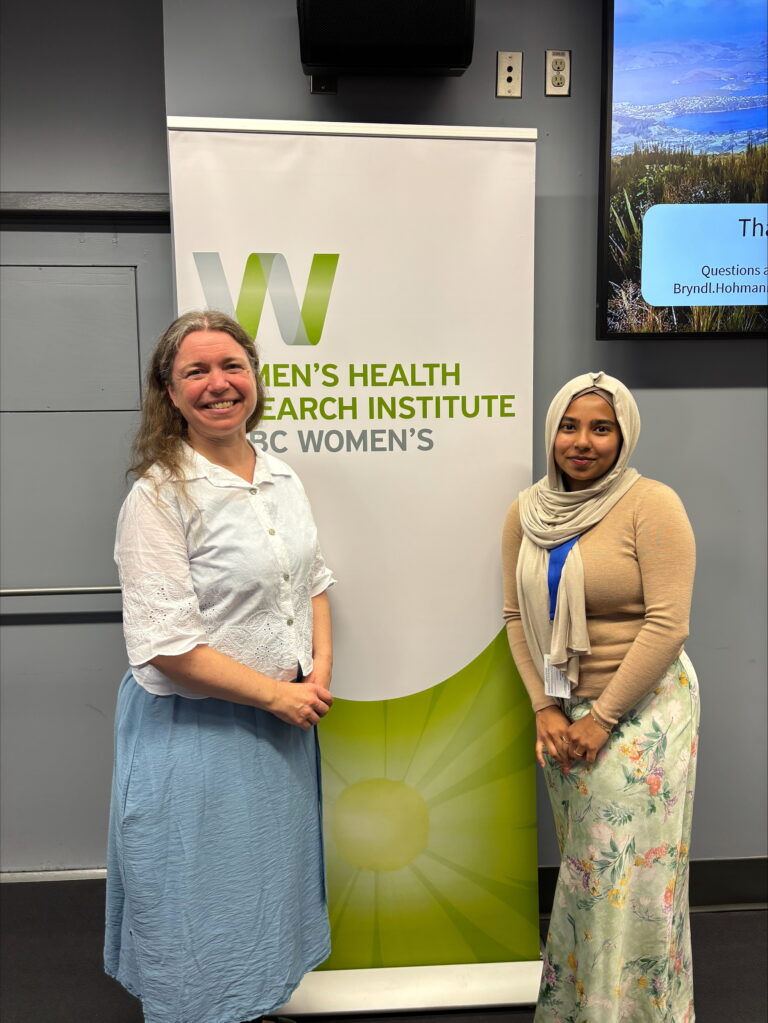
On Friday, June 12, the Women’s Health Research Institute (WHRI) welcomed Dr. Bryndl Hohmann-Marriott, Associate Professor of Sociology at the University of Otago in Aotearoa (New Zealand), as a visiting scholar. Dr. Hohmann-Marriott is the co-founder and co-director of the Centre for Menstrual Cycle Research and the Menstrual Health Research Network.
This visit was made possible through WHRI trainee Zeba Khan, a doctoral student in Dr. Paul Yong’s Endometriosis and Pelvic Pain Laboratory, who will be completing a practicum with Dr. Hohmann-Marriott at the University of Otago this fall.
During her visit to BC Women’s Hospital + Health Centre, Dr. Hohmann-Marriott delivered a thought-provoking presentation titled “Menstrual Cycle Tracking Apps and Patient-Generated Data” and engaged with WHRI researchers, staff, and trainees during a coffee and networking session following her talk.
Examining the Role of Menstrual Tracking Apps
Dr. Hohmann-Marriott’s talk explored how menstrual tracking apps shape both personal and social understandings of menstrual health. These apps rely heavily on patient-generated data, yet they also influence how users interpret their own bodies.
She highlighted how these platforms often position themselves between users and their health, creating standardized definitions of what is considered “normal” or “healthy.” When users fall outside these definitions, they may experience unnecessary anxiety or perceive themselves as unhealthy—even when what they’re experiencing is normal.
A key critique raised was around the perceived objectivity of period tracking apps. As these apps are built entirely on user-generated data, questions remain around
- whether the apps are asking clinically relevant questions;
- whether they are capturing data accurately; and
- whether the format of tracking is useful for healthcare providers and clinicians.
Dr. Hohmann-Marriott emphasized that the data collected by tracking apps may not align with what clinicians need to make informed decisions, limiting the usefulness of these types of data in clinical care.
Concerns About Accuracy and Overreach
A major theme of the presentation was the growing tendency for apps to position themselves as substitutes for healthcare providers. While marketed as tools to help users track ovulation, manage fertility, or even serve as contraception, the evidence suggests that many apps do not deliver accurate or reliable results.
This lack of accuracy can feed misinformation about ovulation and menstruation, as well as about conditions such as Polycystic Ovarian Morphology (PCOM) and endometriosis. Health misinformation can further lead users to misinterpret symptoms or delay seeking appropriate medical care. Indeed, Dr. Hohmann-Marriott cautioned that clinicians are also expressing concerns about patients relying on these apps, particularly for ovulation tracking and contraceptive purposes.
The Framing of “User Error”
Another important takeaway was how these apps frame inaccuracies. Many platforms market themselves as “flawless,” implying that inconsistencies arise from user error rather than limitations in the app’s design or algorithm.
If inaccuracies or discrepancies in data arise, this marketing can unfairly place the blame on users and reinforce a misleading narrative that users’ bodies are the problem. Users are encouraged to avoid relying solely on menstrual tracking apps to gain a full picture of their reproductive health. As Dr. Hohmann-Marriott said in her talk, “the app can be a tool, but not an ally.”
Ethical Considerations and Responsibility
Dr. Hohmann-Marriott raised critical questions about the social responsibility of private companies that provide health-related information. As these apps increasingly function as sources of health guidance, there is a growing need for oversight, transparency, and accountability in how data is collected, interpreted, and presented.
She pointed to emerging alternatives, such as Read Your Body, a menstrual tracking app developed by researchers that integrates with REDCap, offering a more research-informed approach to data collection.
Looking Ahead
Dr. Hohmann-Marriott’s research examines the evolving role of menstrual tracking apps within healthcare systems. Her work is grounded in a commitment to advancing equitable menstrual health research, particularly in Aotearoa (New Zealand), and to strengthening the integration of sociological perspectives into health innovation.
Her visit provided an important reminder that while digital health tools can offer convenience and insight, they must be approached critically. App developers have a responsibility in ensuring that these technologies uphold data sovereignty and empower people to seek health advice and care from clinical professionals.
Recommended Resources
- The High Stakes of Tracking Menstruation by Dr. Stefanie Felsberger
- Period Tracking app: Read Your Body